

When choosing new window frames, the decision often comes down to plastic or timber. Yet doubts immediately arise: which will last longer, and which suits your home best? That’s understandable, as there are several factors to consider. It depends on the type of home you live in, the budget you have available, and how much maintenance you’re willing to do yourself. In this article, we’ll clearly compare the differences side by side, so that you’ll know exactly which option suits your home.
How do plastic and wooden window frames differ?
It mainly comes down to three things: maintenance, price and appearance. Plastic is low-maintenance and usually more affordable. Wood has a natural look but requires more maintenance. In terms of insulation and safety, the materials are very similar. Below, you can read about the differences point by point.
How much maintenance do they require, and how long do they last?
You’ll really notice the difference in the years following installation. Wooden window frames need to be painted periodically, roughly every four to six years. If you don’t do this in good time, the paint will flake off and allow moisture to seep in. Pay particular attention to the bottom sills. These are the lower parts of the window frame, where rainwater tends to pool for the longest time. Plastic frames require much less maintenance. Cleaning them a few times a year and occasionally lubricating the hinges and locks is sufficient.
In terms of lifespan, there is little difference between the materials. Plastic window frames last around 50 to 75 years. Hardwood can last just as long, but only if properly maintained. Softwood is more susceptible to damp and often starts to deteriorate after around twenty years.
Which material provides better insulation?
Heat is often the reason for installing new window frames. You can gauge the insulation from the U-value. The lower the U-value, the better the window frame insulates. PVC has a multi-chamber system. This consists of a profile with air chambers that trap heat. As a result, PVC insulates slightly better than timber. However, the difference is small, as the glass has a much greater impact.
So be sure to look at the glazing. Single glazing has a U-value of around 5.8. HR++ (double glazing) is around 1.1 and HR+++ (triple glazing) around 0.7. You can find an independent overview at Environment First. Good draught-proofing keeps draughts out and makes it quieter inside.
Are you opting for double glazing? If so, you may be eligible for the following when replacing your windows: grant.
What about the look?
For many people, the choice comes down to how it feels. Wood has a warm, natural look. It suits a classic or heritage building beautifully. You can paint wood in almost any colour and repaint it later. Plastic used to be the dull alternative, but that’s no longer the case.
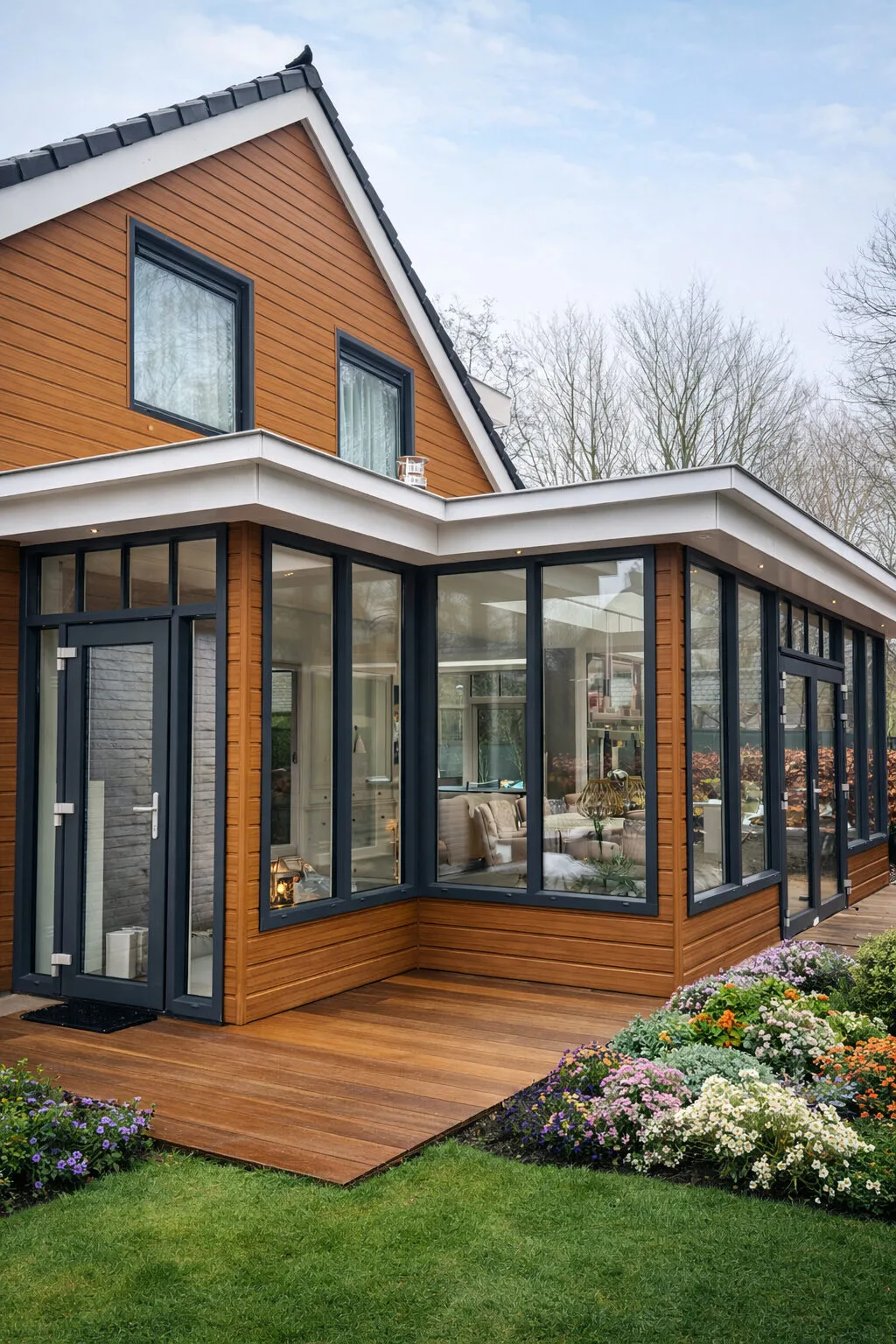
Modern plastic frames They feature a wood grain and clean, sharp corners. This makes them look very much like real wood. You get the look you’re after, but without the need for painting.
How safe and sustainable are they?
Security is a quiet concern for many homeowners. Fortunately, the materials used make little difference in this respect. It is primarily the locks and fittings, as well as the glass, that determine how well your home is protected. Wood is naturally sturdy, whilst uPVC is fitted with a steel core. With approved fittings, you’re in safe hands with both. Do pay attention to the burglary resistance rating. This certification indicates how effectively the fittings prevent break-ins.
And what about the environment? Here too, the materials are very similar. Wood is a renewable resource, provided it is harvested responsibly. In that case, look out for a certification mark such as FSC or PEFC. Plastic is made from PVC and is now recycled effectively. With both materials, the key point is that a window frame that lasts a long time has the least impact on the environment.
Which is better value for money, in the short and long term?
Then there’s the cost. Plastic is usually cheaper to buy. And because there’s no painting involved, it remains more cost-effective in the long run too. The exact price depends on several factors, such as the material, the dimensions and the glazing, as well as the colour and the number of window frames.
So look beyond today’s price. Take the costs over the entire lifespan into account. In the case of timber, factor in the cost of repainting over a twenty-year period. You’ll then find that a more expensive window frame is sometimes actually the best value for money.
When is wood the better choice?
However, plastic is not always the answer. Do you live in a listed building or a conservation area? If so, strict rules often apply. The planning committee assesses the appearance of buildings. It may require that the original profile and materials be retained. In most cases, you will therefore need a planning permission. This is authorisation from the local authority to carry out alterations.
Even without those rules, people make a conscious choice to use wood. For an old building with delicate window frames, wooden frames often the best choice. The detail really comes into its own in wood. Do you like that look? Then you’ll be happy to put up with the maintenance.
What should you bear in mind when replacing it?
Have you made up your mind? If so, there’s one more important thing to consider: the replacement itself. Wooden window frames can bear weight, whereas plastic ones cannot. Are you replacing load-bearing window frames? If so, have the masonry assessed first to see if it needs additional support.
Do you live in an older house? If so, be aware of asbestos. In properties built before 1994, asbestos may be present around the window frames. An asbestos survey will provide certainty on this matter. This is an investigation that determines whether asbestos is present. Finally, bear ventilation in mind. New window frames seal so tightly that less air enters, which can lead to condensation.
Which window frames are best suited to your home?
Which window frames you choose depends mainly on your circumstances. Are convenience, insulation and price your main priorities? Then PVC is the logical choice. Does your home have a classic or heritage-style design, or does the local council have specific requirements? In that case, timber is the more obvious choice. Can’t decide? Then the wood-effect option offers the best of both worlds.
The table below shows which material scores highest for each benefit.
| Advantage | PVC | Wood |
| Low-maintenance | ✓ | |
| Low purchase price | ✓ | |
| Lowest long-term costs | ✓ | |
| Best insulation value | ✓ | |
| A wide range of colours available | ✓ | ✓ |
| Wood-effect finish available | ✓ | |
| A natural, authentic look | ✓ | |
| Suitable for a listed building or a traditional property | ✓ | |
| May involve a managerial role | ✓ | |
| Long service life | ✓ | ✓ |
So the choice isn’t about which material is best, but about what suits your home. Plastic wins on convenience, insulation and price. Wood is ideal for its aesthetic appeal and for older or listed buildings. Still not sure which way to go? Feel free to ask us – we’d be happy to help you decide.